
Blog
2026 Best Sports First Aid Kits for Global Buyers
Choosing among the 2026 best sports first aid kits requires more than comparing prices, pouch colors, or product counts. Global buyers need practical protection for football fields, cycling routes, school gyms, climbing areas, and remote training camps. A useful kit should support immediate care for cuts, sprains, blisters, bruises, minor burns, and suspected fractures. It should also remain organized when someone is frightened, tired, or working in poor weather.
Dr. Ron Courson, a respected athletic trainer and sports medicine leader, has shared a simple principle: “Preparation can change the outcome of an injury.” That idea guides this comparison. The strongest kits offer clear labels, durable packaging, sterile dressings, gloves, cold packs, wound-cleaning supplies, and reliable instructions. Some include too many small items. Others miss basics that athletes actually use.
Experience matters here.
A kit designed for a professional stadium may not suit a youth team or international traveler. Buyers should check expiry dates, refill availability, language support, storage temperature, and local medical guidance. Product claims also deserve careful review. “Complete” does not always mean complete for your sport.
This guide examines performance, portability, organization, material quality, and long-term value. It considers both organized teams and independent athletes. No kit replaces professional medical assessment. A poorly treated injury can worsen quietly. That limitation should remain visible.
The right sports first aid kit is not the largest one. It is the one people can find, understand, and use quickly.
What Defines a Sports First Aid Kit for Global Buyers?
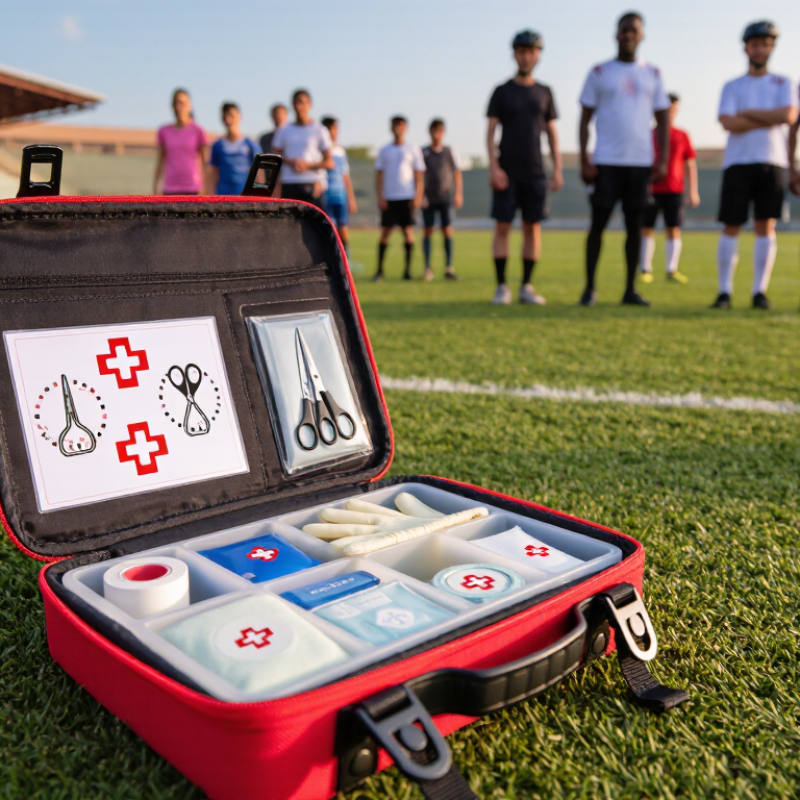
A sports first aid kit for global buyers is more than a pouch of bandages. It should match the sport, venue, climate, and expected group size. A trail-running kit needs blister care, elastic wraps, wound dressings, and emergency insulation. A court-sports kit may need instant cold packs, finger tape, and sterile gauze. Practical field checks often reveal gaps that product lists hide.
Reliable kits use clearly labeled compartments and durable, water-resistant packaging. Supplies should include gloves, antiseptic wipes, wound closures, trauma dressings, scissors, tweezers, and a CPR barrier. Every item needs readable expiry dates and traceable batch information. Instructions should use plain English, clear diagrams, and, when possible, local languages. This matters during stress. Small labels can cause big delays.
Global purchasing also requires careful compliance review. Product contents, medical claims, packaging rules, and included medicines may differ between countries. Buyers should confirm local requirements before importing or distributing kits. Medicines deserve extra caution because allergies, dosage rules, and national regulations vary. A kit without medicine may be safer for broad international use, but it may feel incomplete to some teams. That trade-off deserves honest discussion. No kit covers every injury. Regular inspections, replacement records, and basic responder training make its contents more dependable in real situations.
2026 Best Sports First Aid Kits for Global Buyers - What Defines a Sports First Aid Kit for Global Buyers?
| Kit Type | Typical Users | Recommended Capacity | Core Contents | Sports-Specific Items | Portability | Best Environment | Global Buyer Considerations |
|---|---|---|---|---|---|---|---|
| Personal Sports Kit | Individual athletes, runners, cyclists and hikers | 1 person; compact 0.3–0.8 L pouch | Adhesive plasters, sterile gauze, antiseptic wipes, medical tape, disposable gloves, scissors and a basic emergency information card | Blister pads, elastic support bandage, instant cold pack and small wound-cleaning supplies | Pocket or belt-pack format; typically under 0.5 kg when lightly filled | Training sessions, day hikes and individual travel | Use clear multilingual labels, moisture-resistant packaging and contents permitted by the destination country |
| Team Training Kit | School teams, amateur clubs and regular training groups | 10–20 people; approximately 2–5 L case | Assorted plasters, sterile dressings, gauze rolls, triangular bandage, gloves, tape, scissors, tweezers, cleansing wipes and instant cold packs | Elastic wraps, cohesive bandage, blister treatment, finger supports and reusable cold-compress options | Lightweight zip case with compartments and a carry handle | Indoor courts, gyms, fields and routine practices | Check whether local sports authorities require a designated first aider or additional emergency equipment |
| Match-Day Team Kit | Competitive teams, coaches, referees and sideline medical staff | 20–30 people; approximately 5–10 L case | Multiple dressing sizes, sterile gauze, wound-closure strips, gloves, tape, scissors, cleansing solution, cold packs and waste bags | Several elastic bandages, sports tape, finger tape, instant cold packs, emergency blanket and eye-wash supplies | Large organized bag; commonly carried by a coach or trained responder | Football, rugby, basketball, volleyball and tournament venues | Separate sterile items from used materials and maintain an inventory after every match |
| Outdoor Adventure Kit | Trekking groups, campers, climbers and adventure-tour operators | 2–6 people; approximately 2–6 L waterproof pouch | Trauma dressings, gauze, gloves, tape, bandages, antiseptic wipes, scissors, tweezers, emergency blanket and first-aid instructions | Blister treatment, tick-removal tool, rehydration sachets, compression bandage and burn dressing | Water-resistant roll-top or sealed pouch; designed for backpack storage | Remote trails, mountains, forests, beaches and variable weather | Prioritize waterproofing, compact packing, temperature tolerance and instructions in the users’ languages |
| Water Sports Kit | Swimming clubs, rowing groups, sailing teams and waterside facilities | 10–20 people; approximately 3–6 L water-resistant case | Sterile dressings, gauze, gloves, wound-cleaning wipes, tape, scissors, eye protection and emergency blanket | Waterproof plasters, burn dressings, eye-wash solution, thermal blanket and supplies for minor cuts | Sealed or floating pouch where appropriate; quick-access internal layout | Pools, beaches, marinas, lakes and coastal sports facilities | The kit supports first aid but does not replace trained lifeguards, rescue equipment or local water-safety procedures |
| Travel and Vehicle Sports Kit | Sports travelers, coaches, support vehicles and event transport teams | 4–10 people; approximately 2–5 L hard or semi-hard case | Dressings, plasters, gauze, gloves, tape, scissors, cleansing wipes, triangular bandage and emergency blanket | Sports tape, elastic bandage, cold pack, blister pads and burn dressing | Impact-resistant case suitable for luggage, bus or support vehicle storage | Road trips, competitions, camps and international sporting travel | Verify import restrictions, labeling language, customs requirements and vehicle-kit rules in each destination |
| Event and Tournament Kit | Race organizers, tournament operators and venue teams | 50+ participants; multiple 10–20 L stations or mobile bags | Large quantities of dressings, gauze, gloves, plasters, tape, cleansing materials, cold packs, waste bags and incident forms | Heat-management supplies, blister care, eye wash, burn dressings and emergency blankets | Distributed across fixed first-aid points and mobile response bags | Marathons, school tournaments, cycling events and large outdoor gatherings | Plan quantities according to attendance, venue size, response time, weather and local event regulations |
| First-Aid Refill Pack | Organizations maintaining existing cases | Selected consumables; approximately 0.5–5 L package | Replacement plasters, sterile dressings, gauze, gloves, tape, cleansing wipes, cold packs and waste bags | Replacement sports tape, elastic wraps, blister pads and burn dressings | Flat, lightweight pack organized by item category | Clubs, schools, gyms, event offices and response vehicles | Match refill contents with the existing case format, expiry dates, local regulations and user requirements |
Related Posts
-
What Are the Top 10 First Aid Kits for Home?
-
What Are the 10 Best First Aid Kits in 2026?
-
10 Essential Tips for Choosing First Aid Products for Your Home
-
How to Choose the Best First Aid Products for Your Needs?
-
Best First Aid Kits for Home Essential Supplies You Need?
-
Why Do Sports Teams Need First Aid Kits?